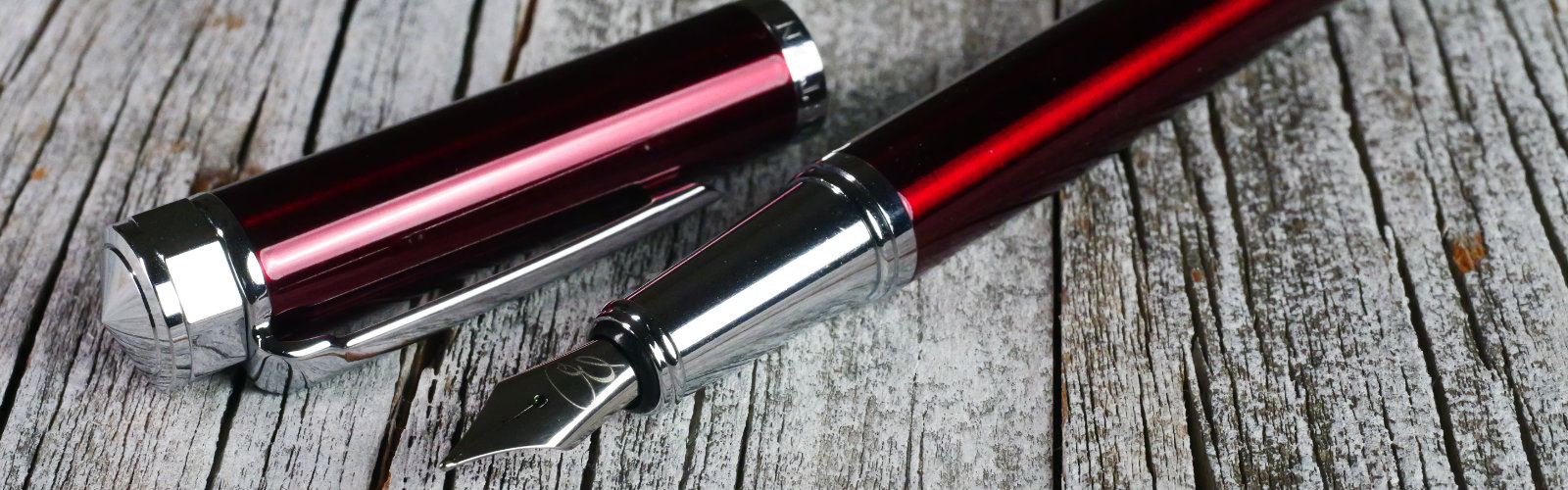
Here is a question: Why did it take me this long to explore the world of fountain pens for illustration and writing? Seriously, this should have been an obvious tool for me. I guess better late than never, right?
Now, I should say that I've actually used fountain pens in the past. One would be hard pressed to grow to adulthood without ever using one, but fountain pens never really stuck with me as a drawing tool I would like to invest into. For decades, I stuck with my old standbys, felt pens like Microns and traditional dip pens with cheap nibs. Maybe it was the price (fountain pens can get expensive), or I was worried they would require too much maintenance, but for whatever reason, fountain pens never called to me.
 It was actually Microns that caused me to reconsider fountain pens. For the last couple of years, I've been splitting my time between two cities, which ultimately led to me moving to Las Vegas. During this time, I wasn't using my art materials as much and they were in storage for a time. When I finally sat down to do some drawing, I found a large number of my Microns were dried out. I tallied up how much they'd have cost me, and I could have bought a decent fountain pen for the same price, a pen where the ink is refillable. Suddenly, fountain pens made more sense. Not only am I not throwing away pens when they die, I would save money in the long-run.
But what about dip pens? I love them, and still use them, but it's not practical to take a bottle of ink and a dip pen to a cafe. I've spilled a bottle of ink before, and I dread that happening in a public place. Fountain pens shine in the way they're transportable, less messy and write just as well, if not better, as a dip pen.
Speaking of line quality, I noticed fountain pen nibs tend to be much higher quality than dip pen nibs, even from affordable brands like Lamy and Pilot. I've always found dip pens to have great line quality, but they often scratch up your paper, depending on how stiff the nib is. If you run your fingers over one of my pen illustrations, you can feel the scoring on the paper. So far, the fountain pens I've used are much smoother.
Beyond the initial cost, are there downsides to fountain pens? While there are a lot of nib sizes available for fountain pens, dip pens still have a much wider range of options, partially for illustrators that have specific needs. I have yet to find a fountain pen nib that rivals a cartooning nib or inking brush for creating expressive lines with large variations of width. If that's your style, you'll likely still need a dip pen and/or inking brush.
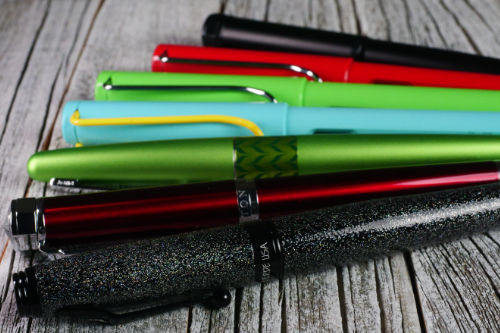
If you're interested in trying out a fountain pen, there are many options that are relatively affordable. Two brands that I've tried are the Pilot Metropolitan and the Lamy Safari. Of the two, I'm liking the Lamy Safari a bit more, but I think either one would be a great starting pen. I've bought three Lamy Safaris now, each with a different nib width for line variety. We will see where this new obsession takes me. Watch for future blog posts on this topic and thanks for reading!